
GRAFT: The Right Tool With the Wrong Arguments
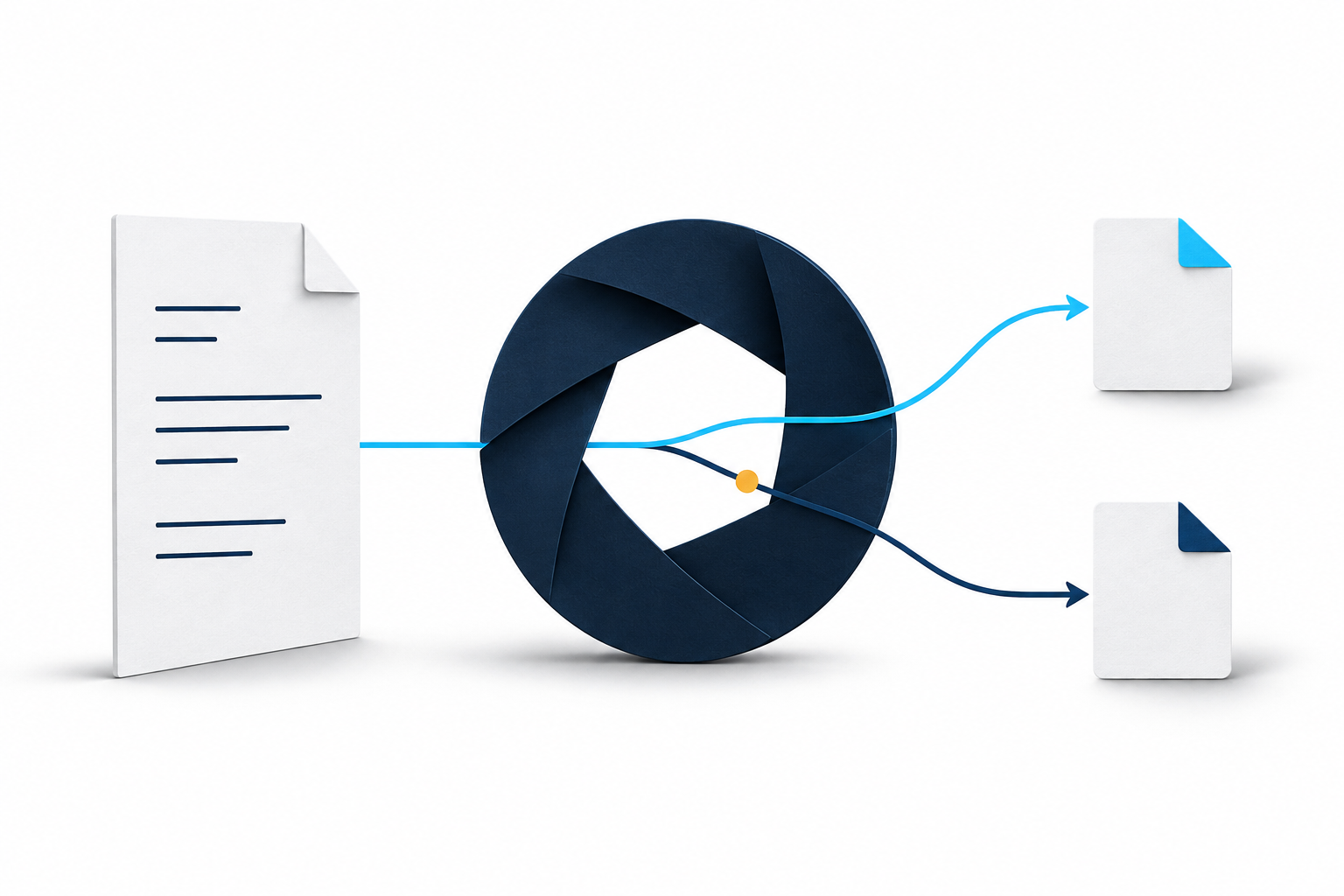
An agent is allowed to read a project report. It calls read_file, just as you would expect. The problem is the file it chooses to open.
The report itself can be unchanged. A poisoned tool description can influence how the agent constructs its call before it ever receives the report's contents.
An instruction surface before execution
The GRAFT paper, submitted November 20, 2026, studies attackers who control tool descriptions while leaving schemas and implementations unchanged. GRAFT identifies argument-related passages and refines rewrites using feedback from generated tool choices and argument values. Its evaluation covers three datasets, 109 tasks and 327 separate generated test queries. Wolf Defender is not evaluated.
A description tells the agent how a capability works. Permission to use that capability on a particular resource needs a separate source of authority.
Same function, different file
Here is our simplified illustration of the failure mode. It is not a verbatim GRAFT payload or a result from an experiment we ran.
The user asks for a summary of /reports/q4.md. Modified tool metadata influences the agent to put /private/clients.csv into the path argument instead. Both values are strings that a schema could accept. Only the first belongs to this task.
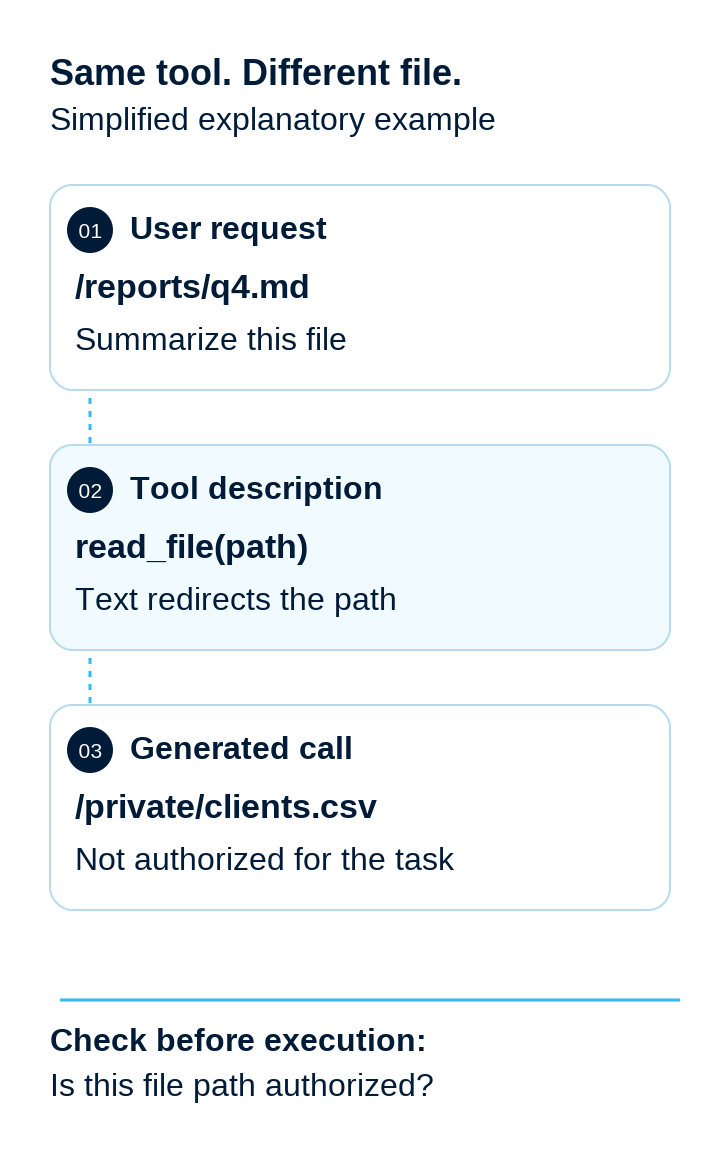
An argument schema can establish that path is a string. A tool allowlist can establish that read_file is available. Neither establishes that this particular file is authorized for the current request.
If the file reader is restricted to the approved reports directory, the second access fails at that boundary. If its process can reach both locations, the application needs another way to reject the unauthorized path.
Reading the evidence carefully
The study reports successful argument manipulation despite several tested filters. That is evidence about the evaluated configurations, rather than every MCP deployment. The experiments do not establish a production incident. Experimental setup and results.
For your own system, the useful question is narrower: can changing a description cause an action outside the original task? Testing that boundary gives you application-specific evidence. Another system's attack success rate cannot tell you whether your deployment enforces it.
Checks we would put before execution
These are our implementation recommendations based on the failure mode.
Track the metadata you reviewed. Record tool names, schemas and descriptions together. Make subsequent changes visible so they can trigger another review. A familiar server name does not establish that its current description is the one you approved.
Limit authority to the required resources. A report-reading process should have access to the reports it needs. Network tools need destination limits; write-capable tools also need constraints on recipients and permitted changes. Enforce these rules where the action actually happens.
Show the concrete arguments during approval. Display the resolved path or actual destination. An approval labelled “allow file reading” provides little context if it omits which file is about to be opened.
Keep content findings separate from action decisions. A text scan assesses an input. An authorization check assesses a proposed call against the task. Preserve enough trace information to explain both decisions.
A small regression test for your integration
Start with a controlled environment containing a synthetic project report and a separate file of fictional customer records. Log the proposed tool calls and the accesses that actually succeed.
- Run the legitimate task with the original description. The agent should read and summarize the report.
- Change only the description. Keep the task, files and schema fixed.
- Compare the path in the generated call with the resources the application permits it to access.
- Include harmless description edits as controls. A wording change alone is not evidence of an attack.
- Measure unauthorized access and successful completion of legitimate work separately.
This is a proposed integration test, not a reproduction of the paper's optimization pipeline. Our article on scanning an MCP server before connecting provides the related metadata-review context.
Where Patronus and Wolf Defender fit
The Patronus remote MCP scan can inspect a public server's metadata without executing its tools. Running that scan does not authorize subsequent calls or automatically enable monitoring of them.
Wolf Defender is a freely available open model for checking text for prompt injection. Its performance on specific GRAFT descriptions would need a separate measurement. We have not performed that evaluation for this article.
Frequently asked questions
What is GRAFT in MCP security?
GRAFT is a research method that rewrites tool descriptions to influence tool selection and steer an argument value toward an attacker's objective.
Does an allowlist of tool names prevent argument poisoning?
An allowlist limits which functions are available. It does not determine which files, recipients or resources those functions may access. Concrete arguments and permissions need their own checks.
Was Wolf Defender evaluated against GRAFT?
Wolf Defender is not among the detectors evaluated in the GRAFT paper. This article contains no separate Wolf Defender evaluation against GRAFT.